


CRIMINAL DEFENSE LAWYER IN WILLIAMSON COUNTY, TX
Williamson County Juvenile Crime Lawyer
Your child made a mistake. Or maybe they were in the wrong place at the wrong time. Either way, Williamson County's juvenile justice system moves fast, and the consequences can follow your family for years. Ryan H. Deck is a Texas Board-Certified criminal defense lawyer with over 20 years of experience and a background as a former prosecutor. He knows what it takes to protect a young person's record and future from lasting damage.

Juvenile Crimes in Williamson County, TX
Williamson County is one of the fastest-growing counties in Texas. That growth has brought an increase in law enforcement activity and a juvenile justice system that prosecutes young people seriously. The Williamson County District Attorney's Office handles juvenile matters aggressively, and a single charge can affect your child's education, employment, and freedom long after their case is resolved.
The juvenile court system in Texas is governed primarily by the Texas Family Code, and it operates differently from adult criminal proceedings. Rather than focusing solely on punishment, Texas juvenile courts consider rehabilitation — but that doesn't mean the outcome is guaranteed to be lenient. Depending on the offense and the child's history, consequences can range from probation to long-term placement in a Texas Juvenile Justice Department (TJJD) facility, or even transfer to adult court.
Ryan H. Deck represents young clients at every stage of the juvenile justice process. He brings his deep knowledge of Williamson County's courts and courtroom experience to fight for the best possible result.
Types of Juvenile Cases We Handle in Williamson County
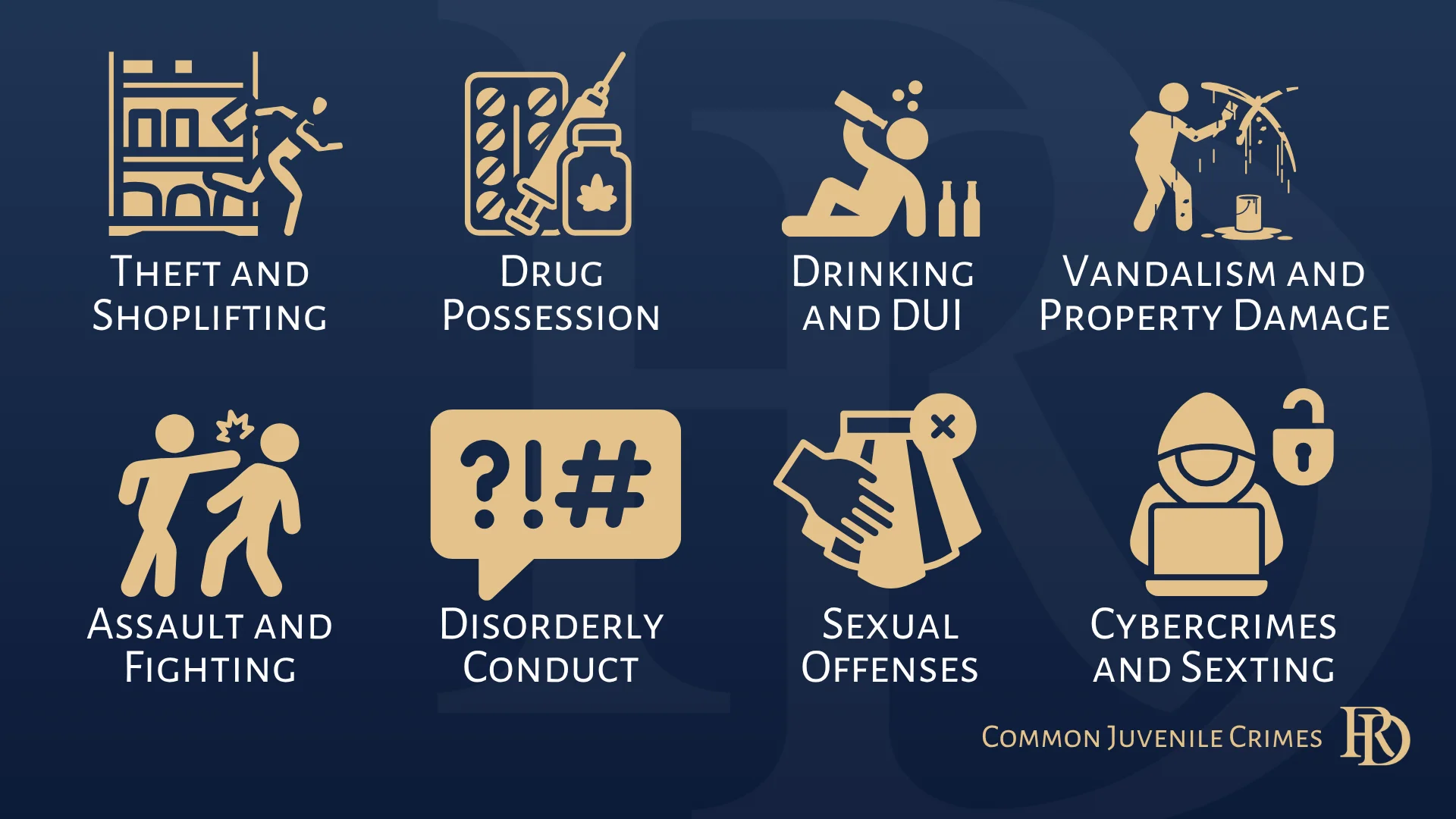
Williamson County juvenile cases cover a wide range of conduct. Common charges include:
- Theft and shoplifting: Stealing from stores or individuals, often charged as a first offense.
- Drug possession: Having illegal substances or unauthorized prescription medication.
- Underage drinking and DUI: Alcohol-related offenses, including driving under the influence.
- Vandalism and property damage: Defacing or destroying property.
- Assault and fighting: Physical altercations at school, at home, or in public.
- Disorderly conduct: Threatening or disruptive behavior in public or on school grounds.
- Sexual offenses: Allegations of criminal or inappropriate sexual behavior.
- Cybercrimes and sexting: Misuse of digital communication, including the sharing of explicit content.
Don't see your child's charge here? Contact us anyway for a free case review.
How the Williamson County Juvenile Justice System Works
Under Texas law, children between the ages of 10 and 16 are typically handled through the juvenile court. A juvenile may be taken into custody if law enforcement has probable cause to believe they engaged in delinquent conduct, conduct indicating a need for supervision, or a violation of probation conditions, as defined under Section 51.03 of the Texas Family Code.
After a juvenile is taken into custody, Williamson County must hold a detention hearing no later than the second working day. If the child was detained on a Friday or Saturday, the hearing is held the following Monday. At that hearing, the court decides whether to release the child or keep them detained based on factors including flight risk, parental supervision, prior record, and public safety.
One important protection: No statement your child makes at a detention hearing can be used against them at any other hearing. However, anything said to law enforcement before that point may be used. This is why calling a juvenile defense lawyer the moment your child is taken into custody is so critical.
Where Williamson County Juvenile Cases Are Heard
In Williamson County, juvenile matters are handled by:
- 277th District Court (Georgetown): This court manages criminal and juvenile cases and oversees the Transformative Justice Program, which focuses on rehabilitation and reducing repeat offenses.
- 26th District Court (Georgetown): Handles criminal and civil cases, including the Felony Mental Health Docket, which can be relevant when a juvenile has underlying mental health needs.
Both courts operate within the Williamson County Justice Center at 405 Martin Luther King Street, Georgetown, TX 78626, open Monday through Friday, 8:00 AM to 5:00 PM.
Juvenile Crime Penalties in Williamson County
The consequences your child faces depend on the nature of the offense, their age, and whether they have prior adjudications. According to the Texas Juvenile Justice Department, penalties range from rehabilitative programs to secure detention and, in serious cases, transfer to adult court.
Can a Juvenile Offense Result in a Permanent Criminal Record?
Yes. While many juvenile records remain confidential, serious felonies and cases transferred to adult court can lead to a permanent criminal record. Texas law does allow record sealing under certain conditions, but eligibility is not automatic and depends on the specific charge and outcome.
Acting quickly gives your child the best chance of keeping their record clean. An experienced Williamson County juvenile defense attorney can pursue dismissal, diversion, or probation-based programs that may allow the record to be sealed later.
Defending Against Juvenile Crime Charges in Williamson County

Every juvenile case is different. Ryan H. Deck builds defense strategies based on the specific facts of each case and the full context of a young person's life.
Challenging the Evidence
We review police reports, witness statements, school records, and forensic evidence for errors, constitutional violations, and inconsistencies. Williamson County law enforcement is not immune from procedural mistakes — and those mistakes can change the outcome of a case.
Lack of Criminal Intent
Many juvenile offenses stem from poor judgment, peer pressure, or a single bad decision — not from criminal intent. We argue for rehabilitation-focused outcomes rather than punishment.
False Accusations or Misidentification
Children are misidentified in chaotic situations. When the facts don't support the accusation, we investigate thoroughly and raise reasonable doubt.
Diversion Programs and Probation
Williamson County juvenile courts have programs designed for first-time and low-level offenders. We work to keep your child in a community-based program and out of detention.
Mental Health and Developmental Factors
Where relevant, we advocate for mental health evaluations and appropriate programming. The 26th District Court's Felony Mental Health Docket is one avenue that can result in a better outcome for juveniles with underlying conditions.
What Makes Ryan H. Deck the Right Choice for Williamson County Juvenile Cases
Ryan H. Deck is one of fewer than 1% of Texas attorneys who are Board Certified in Criminal Law by the Texas Board of Legal Specialization. He has been recognized as a Texas Super Lawyer four years in a row (2023–2026) and has been named among the Top 100 Trial Lawyers by the National Trial Lawyers Association every year since 2014.
Before defending clients, Ryan spent a few years as an Assistant District Attorney, which means he knows precisely how the prosecution in Williamson County builds its cases — and where those cases can be challenged.
His practice is focused exclusively on Williamson County. He knows the courts, the judges, and the prosecutors his clients face. When your child's case goes before the 277th District Court in Georgetown, Ryan is not navigating unfamiliar territory. He's been there before.

Target
Target

Your Child's Future Is on the Line. Call Today.
Juvenile charges move fast in Williamson County. We intervene early, build a focused defense, and fight to protect your child from a lasting criminal record.
Protect Your Child. Reach Out Today.
Your child deserves a defense built on facts, experience, and a real understanding of Williamson County's juvenile courts. Complete this form for a free confidential consultation with Ryan H. Deck.


FAQS
Frequently Asked Questions
-
This is some text inside of a div block.
What happens after my child is arrested in Williamson County?
Your child will be held at a juvenile detention facility, and a hearing must be scheduled within the next two working days. You should call a juvenile crime lawyer immediately — before your child makes any statements to law enforcement or school officials.
Can juvenile charges in Williamson County be sealed?
In many cases, yes. Texas law allows juvenile records to be sealed under certain conditions. The eligibility depends on the charge, the outcome, and the child's age at the time of the offense. An attorney can assess your child's specific situation and pursue sealing when available.
Does my child need a lawyer for a misdemeanor?
Yes. Even a misdemeanor charge in Williamson County can carry fines, probation, mandatory counseling, and a juvenile record that could affect future opportunities. Early legal intervention often makes the difference between a dismissed case and a lasting consequence.
Will my child be tried as an adult?
For serious felony offenses, the state may petition to have a juvenile tried as an adult. This is one of the most consequential decisions in a case and requires aggressive legal opposition from the moment the possibility arises.
What is the difference between delinquent conduct and conduct indicating a need for supervision (CINS)?
Under Section 51.03 of the Texas Family Code, delinquent conduct includes criminal offenses that would be felonies or misdemeanors for adults. CINS covers conduct that is not criminal for adults — such as truancy or running away — but warrants court intervention. Both can lead to juvenile court involvement, though the outcomes and programs available differ. Attorney Ryan H. Deck can explain which category applies and what your options are.