


Board-certified criminal lawyer in round rock, TX
Can You Refuse a Vehicle Search in Texas? Your Rights During a Car Stop.
Yes — you can refuse a police search of your car in Texas, and in many situations, you should politely refuse consent. Consent is one of the easiest ways for police to legally search your vehicle. If you say “sure”, you may have just removed one of the strongest legal arguments your criminal defense attorney could use later.
That doesn’t mean refusing will magically stop a search every time. Texas law enforcement officers can still legally search in certain situations, such as when they have probable cause, when an exception to the Fourth Amendment applies, or during an inventory search after impoundment. But if you refuse consent, you force the police department to justify the search under the correct legal standard.
Your Core Rights During a Traffic Stop in Texas
When a police officer pulls you over for a traffic violation, you still have legal rights.
You generally should:
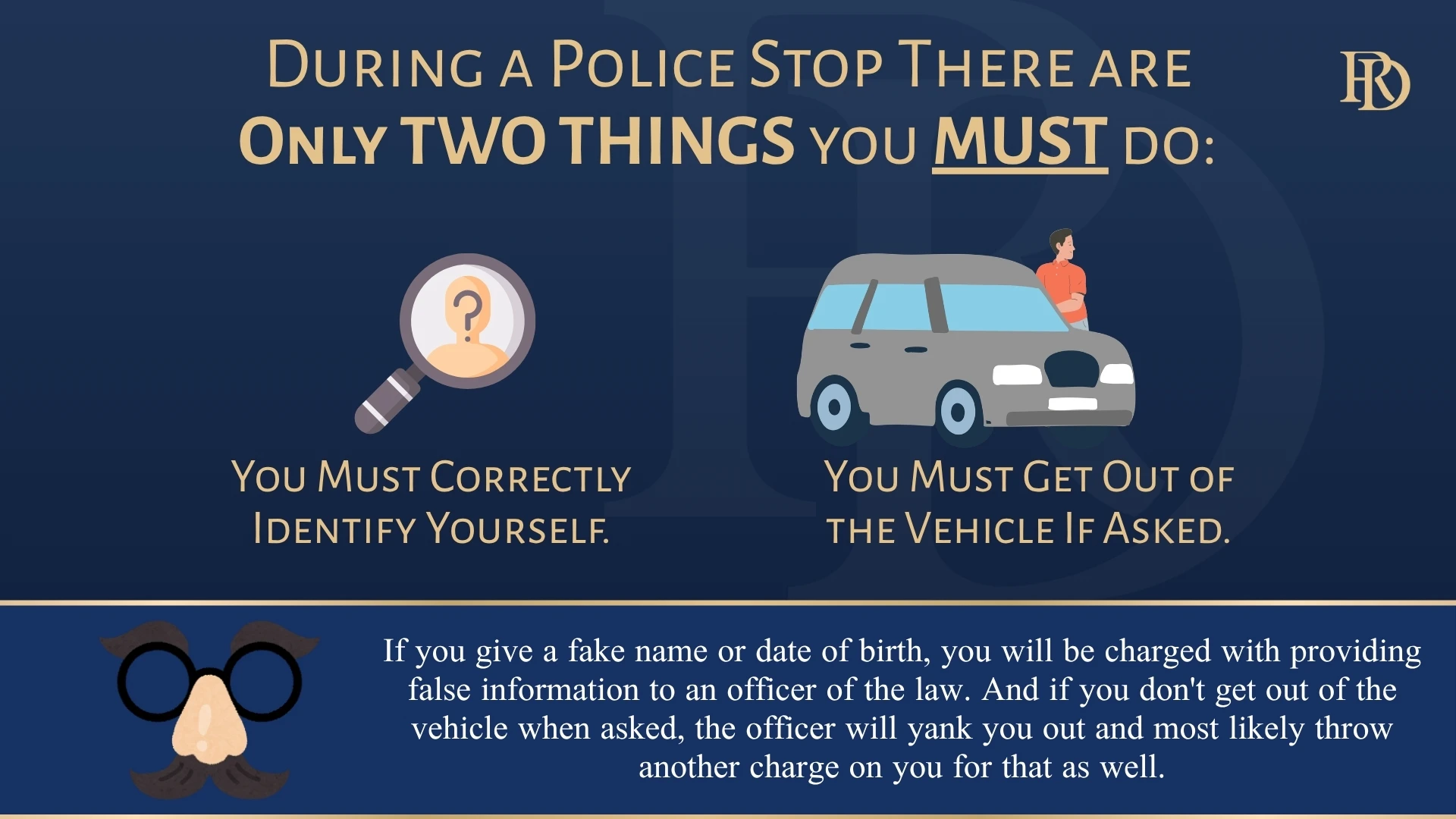
- Provide your driver’s license (and registration/insurance if requested)
- Remain calm and avoid sudden movements
- Follow lawful instructions (like stepping out of the vehicle if told)
- Remain silent beyond basic identification if questions start going beyond the stop
You do not have to:
- Answer “Where are you going?” or “Have you had anything to drink?”
- Explain your life story
- Give consent for a vehicle search
What to Say When an Officer Asks to Search Your Car
If a police officer asks, “Do you mind if I search your car?” your best move is a calm, clear refusal:
“Officer, I respectfully do not consent to a search.”
That’s it. No arguing. No sarcasm. No lecture about constitutional rights. Just a polite refusal.
If the cop asks again (“So you’re refusing?”), you can repeat:
“Yes, I’m refusing consent.”
This matters because consent searches are hard to fight later. A refusal helps preserve your ability to challenge an unlawful search.
Does Refusing Consent Make Things Worse
Many drivers worry that refusing will “make the officer mad”. The truth is: refusing consent can change the tone, but it’s your right.
What you should avoid is behavior that gives the officer a reason to escalate:
- Don’t argue
- Don’t make sudden movements
- Don’t reach into compartments without saying what you’re doing
- Don’t try to block a search physically
Stay polite. Stay steady. Let the legal fight happen later in court, not on the side of the road.
When Police Can Search Your Car Without a Warrant in Texas

Here’s the important nuance: while the warrant requirement is the default rule under the Fourth Amendment, there are several exceptions that allow a warrantless search of a vehicle.
Probable Cause and the Automobile Exception
If officers have probable cause to believe your car contains contraband or evidence related to a crime, for example, if you're under suspicion of drug possession (or a drug-related DWI), they may be able to legally search your car without a warrant under the automobile exception.
Probable cause is more than a hunch. It’s facts that would lead a reasonable person to believe evidence is present. For example:
- Plain view: Illegal items or drug paraphernalia visible inside the car.
- Admissions: You tell the officer something that establishes a legal reason to search.
- Smells or other observations: Courts analyze these carefully, and they’re often challenged.
If police conduct a search without consent, the state must later defend it as lawful. If it wasn’t, the defense may argue evidence obtained should be excluded.
Search Incident to a Lawful Arrest

If there’s a lawful arrest, police may sometimes search the vehicle, but such a search has limits.
The U.S. Supreme Court has held that police may search a vehicle incident to arrest only in specific circumstances, such as when the arrestee can access the passenger compartment or when it’s reasonable to believe the vehicle contains evidence of the offense for which the arrestee was arrested.
So a police arrest does not automatically mean officers can search everything in the car, no matter what.
Inventory Search After Impoundment
An inventory search is not a “crime evidence search”. It’s an administrative search used when a vehicle is lawfully impounded to document property and protect against claims.
But inventory searches are heavily litigated because they’re sometimes used as a workaround. The key questions often include:
- Was the impound lawful?
- Did the police department follow a real inventory policy?
- Was the “inventory search” actually a fishing expedition?
If it was pretextual, a defense attorney may argue it was an illegal search.
Valid Search Warrant
If police have a valid search warrant, they can legally search the places described in the warrant. (This is one reason refusing consent matters: it can push law enforcement toward the proper process instead of shortcutting through consent.)
Reasonable Suspicion vs. Probable Cause
These two phrases get confused constantly.
- Reasonable suspicion can justify a traffic stop or brief investigation.
- Probable cause is usually needed for an arrest or a more intrusive search.
If an officer has only a vague suspicion (for example, “officers witness suspicious behavior”, such as nervousness), that alone may not justify a full vehicle search. “Suspicious behavior” is often debated in court, especially when it’s nothing more than normal stress during a police stop.
“I Have Nothing to Hide” Is Not a Safe Strategy
This is where good people get burned.
Even if you personally did nothing wrong, a search can still lead to criminal charges:
- A family member’s leftover prescription
- Someone else’s forgotten vape or drug paraphernalia
- A passenger’s belongings
- An item you didn’t know was in the car
Once illegal items are found, the search leads to a swift arrest, and now your case turns on whether that search was lawful.
What If the Officer Searches Anyway After You Refuse

If you refuse consent and the officer searches your car without a warrant, you have two jobs:
- Do not interfere physically (that creates new problems)
- Document everything you can for your lawyer after the stop ends
Details that matter later:
- What did the officer say was the reason for the search?
- Where were you stopped?
- Were you detained for a long time?
- Did the officer claim “probable cause”?
- Did the officer say they were doing an inventory search?
- Did they search containers, the trunk, or locked areas?
Then call a criminal defense lawyer immediately. A good defense often starts with challenging the search because if the search was unlawful, your attorney may file a motion to suppress.
How an Illegal Search Can Help Your Defense
If a search violated the Fourth Amendment, the defense may invoke the exclusionary rule, a legal doctrine that can prevent unlawfully obtained evidence from being used in court.
That matters because, in many car-search cases, the evidence found is the entire case. Remove the key evidence, and the prosecution’s leverage collapses.
Know Your Rights in Williamson County, TX
If you’re wondering, “Can you refuse a search of your car in Texas?” The quick answer is yes, you can, and refusing consent is often the smartest move you can make during a traffic stop. Refusing doesn’t guarantee officers won’t search your car, but it can protect your Fourth Amendment rights and preserve critical defense arguments if the police conduct was unlawful.
If you were searched, arrested, or charged after a vehicle search in Williamson County, Ryan H. Deck can help. As a Texas board-certified criminal defense attorney, Ryan knows how Texas courts analyze probable cause, warrantless search exceptions, inventory searches, and searches incident to arrest. He will use his advanced knowledge and skill to fight to suppress key evidence when law enforcement crosses the line.


Texas Board-Certified Criminal Defense Attorney with over 20 years of experience
Target
Target

Don’t Let a Car Search Turn into a Conviction
If police searched your vehicle and you’re facing criminal charges, get legal help now.