


Board-certified criminal lawyer in round rock, TX
Vehicular Manslaughter vs. Vehicular Homicide: What’s the Difference in Texas
A fatal accident on the road brings devastating legal implications. Drivers facing an unintentional killing charge often confuse vehicular manslaughter with vehicular homicide. While people use these terms interchangeably, the difference between vehicular homicide and manslaughter varies significantly by jurisdiction. If a person operates a motor vehicle involved in an incident where a death occurred, Texas law categorizes the offense based on very specific criteria.
Let’s break down the difference between vehicular homicide and vehicular manslaughter, how Texas handles these cases, and what it means if you’re facing homicide charges after a crash.
Vehicular Homicide vs. Manslaughter
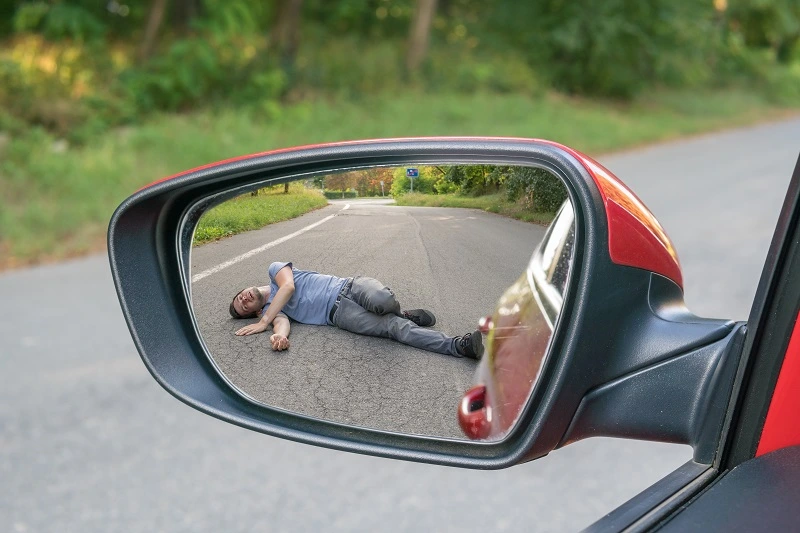
In many states, the key difference between these two serious charges centers on the driver's state of mind, recklessness, and intent.
- Vehicular Homicide: This charge generally involves a driver’s actions demonstrating gross negligence or a blatant disregard for human life, leading to the death of another person. It is often treated as the more severe crime.
- Vehicular Manslaughter: Vehicular manslaughter refers to the unlawful killing of a human being without malice aforethought. It often overlaps with involuntary manslaughter, where someone's death results from negligent or reckless behavior rather than an intentional act to kill.
The differences between vehicular classifications take a different form in Texas. The state does not use the exact statutes "vehicular homicide" or "vehicular manslaughter". Instead, Texas prosecutors use a specific set of laws to address a death caused by a car.
How Texas Classifies Vehicular Manslaughter Cases
If involved in a fatal crash in Texas, the prosecution evaluates the driver's actions and the circumstances to determine the appropriate criminal charges. The state categorizes these events based on the degree of fault.
1. Manslaughter
Under Texas Penal Code § 19.04, manslaughter occurs when a person recklessly causes the death of an individual. This is what most people mean when discussing vehicular manslaughter charges. Recklessness is a required element; the driver must be aware of a substantial and unjustifiable risk but consciously choose to ignore it.
For example, if a driver speeds excessively or runs a red light while engaging in reckless driving, and that reckless behavior causes a collision in which a death occurs, they could face a manslaughter charge, a second-degree felony under Texas law.
2. Criminally Negligent Homicide

If the driver's actions fall short of recklessness but still involve a gross deviation from the standard of care a reasonable person would exercise, the charge is criminally negligent homicide. Criminal negligence implies the driver should have been aware of the risk. This offense is a state-jail felony, carrying less severe penalties than a second-degree felony but still resulting in a permanent felony record.
3. Intoxication Manslaughter
If a driver operates a vehicle in a public place with a Blood Alcohol Concentration (BAC) of 0.08% or higher, or under the influence of drugs, and that impairment causes the death of another person by accident or mistake, they face intoxication manslaughter.
Unlike murder charges, the state does not need to prove intent to kill; they only need to prove intoxication and causation. Historically a second-degree felony, recent legislative updates elevate the charge to a first-degree felony if the incident results in the deaths of multiple victims in the same criminal transaction, or if the victim was a first responder on duty. Intoxication-related deaths in Texas typically lead to much higher penalties compared to those involving negligence alone.
Severe Penalties and Lasting Consequences
Sentencing for these crimes carries severe penalties. A lawful act of driving a vehicle, crossing into criminal negligence, or reckless behavior leads to:
- Years in prison: A second-degree felony carries a sentence of 2 to 20 years in prison. A first-degree felony can lead to life in prison.
- Massive fines: Up to $10,000.
- License suspension: A convicted driver faces a lengthy suspension of their driving privileges. If labeled a habitual violator, restoring driving privileges is incredibly difficult.
The two degrees of felony charges most common in these cases (state jail and second-degree) represent a massive difference in potential jail time and long-term fallout.
How a Defense Attorney Dismantles the Prosecution's Case
An arrest, though, is not a conviction. Fighting vehicular manslaughter charges requires a Board Certified legal specialist to protect your rights and future. The legal process for vehicular manslaughter or homicide is complex and requires professional guidance to build a strong defense strategy tailored to your case.
Behind the scenes, your attorney acts as a shield. An experienced defense attorney may investigate the accident scene, gather evidence, interview witnesses, and work with expert witnesses (like accident reconstructionists) to challenge the prosecution's case. They look for intervening factors, such as a vehicle defect, a medical emergency, or the other driver's actions.
Often, an attorney can negotiate with the prosecution for a reduced charge or explore alternative sentencing options, potentially resulting in the dismissal of the two charges.
Contact a Williamson County Criminal Defense Attorney
If facing vehicular manslaughter charges or any offense related to a fatal accident, you need aggressive legal representation with a proven track record. The line between an unintentional killing and a violent crime is heavily scrutinized.
Ryan H. Deck is a Texas Board-Certified criminal law defense lawyer in Round Rock, TX, serving clients throughout Williamson County. He knows the legal implications of these cases and fights to protect your rights and freedom.
Contact us today to schedule a free consultation and start building your defense.
FAQs


Texas Board-Certified Criminal Defense Attorney with over 20 years of experience
Target
Target

Facing Serious Charges After a Fatal Accident?
Don’t wait to protect your future. Speak with an experienced criminal defense attorney today.
What is the average sentence for vehicular manslaughter in Texas?
While there is no single "average" sentence since every case is heavily dependent on the specific circumstances, standard vehicular manslaughter (charged as Manslaughter under the Texas Penal Code) is a second-degree felony. If convicted, the statutory penalty requires a sentence of 2 to 20 years in a Texas Department of Criminal Justice (TDCJ) prison, along with a fine of up to $10,000.
What is worse, vehicular homicide or vehicular manslaughter?
In states that use both terms, vehicular homicide is generally considered worse because it implies a higher degree of gross negligence, extreme recklessness, or criminal intent. Manslaughter is usually viewed as an unintentional killing resulting from simple negligence.
However, Texas doesn't use the term "vehicular homicide" in its penal code. Instead, Texas prosecutes these fatal crashes as Manslaughter, Criminally Negligent Homicide, or Intoxication Manslaughter. Among these, Intoxication Manslaughter is typically treated with the harshest prosecutorial weight.
Do people go to jail for vehicular manslaughter?
Yes, absolutely. Because vehicular manslaughter is typically charged as a second-degree felony in Texas, a conviction almost always results in significant prison time. While probation (community supervision) is legally possible in some very narrow circumstances, judges and juries rarely grant it when a fatality is involved.
How long do you lose your license for vehicular homicide?
If you are convicted of a fatal vehicular offense in Texas, whether it is prosecuted as Manslaughter or Intoxication Manslaughter, your driver’s license will typically be suspended for a period ranging from 180 days to 2 years.
What is the sentence for vehicular manslaughter while drunk?
In Texas, causing a fatal accident while driving drunk is specifically charged as Intoxication Manslaughter. It is a second-degree felony carrying a 2 to 20-year prison term and a fine of up to $10,000. However, the penalties can increase drastically. If the victim was a first responder on duty, or if multiple people were killed in the crash, the state can enhance the charge to a first-degree felony, which carries a devastating punishment of 5 to 99 years, or life in prison.