


Board-certified criminal lawyer in round rock, TX
Texas DWI Blood Test: Do You Have to Give a Sample?
If you’ve been stopped for suspected DWI in Texas, one of the first things you’ll hear is: “I need a breath or blood sample.” At that moment, most people panic. Do you have to give a blood sample? Can you refuse? And if you refuse, what happens next?
Because Texas takes drunk driving seriously, the answers aren’t always as simple as yes or no. Let’s break down how Texas DWI blood tests work and what your rights are.
Texas DWI Law: Implied Consent
Under Texas law, the second you drive a motor vehicle on Texas roads, you’re operating under something called “implied consent”. This means that if you are arrested for DWI, you are considered to have already agreed to provide a breath or blood sample to determine alcohol concentration or the presence of controlled substances.
However, implied consent only applies after an arrest, not before.
Police cannot force you to blow into a portable roadside device and cannot force a blood draw without a warrant (unless certain exceptions apply). But once you are arrested, the rules change.
Can You Refuse a Blood Test in Texas?
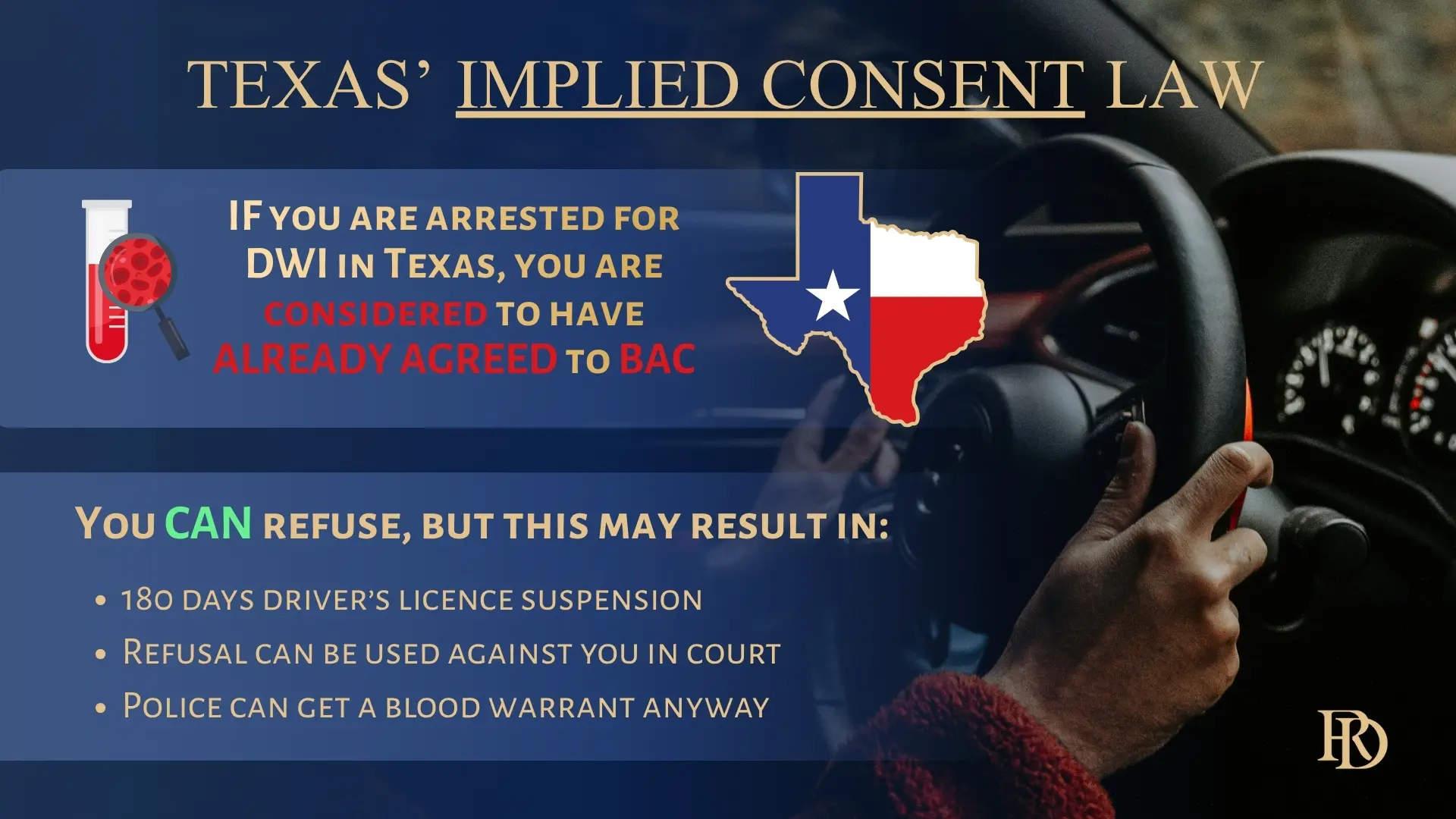
Yes, you can refuse a blood test, but refusing is not without consequences.
If you refuse to provide a breath or blood sample after a lawful DWI arrest:
- Your driver’s license will be suspended (usually 180 days for the first refusal);
- The refusal can be used against you in court;
- Police can often get a search warrant for your blood sample anyway.
And in many departments, especially during No-Refusal Weekends, warrants are processed quickly with on-call judges. So refusing might delay the blood draw, but it rarely prevents it entirely.
When Police Can Force a Blood Draw
Police officers must either:
- Have your consent, or
- Obtain a search warrant, or
- Rely on a legally recognized exception
Texas law used to allow mandatory blood draws in certain cases (such as those involving serious injuries), but after certain U.S. Supreme Court decisions, a warrant is generally required unless the circumstances are extraordinary.
Most forced blood draws occur after a judge signs a warrant. Once a warrant is issued, you must comply, and your blood will be drawn by a qualified medical professional, such as a registered nurse, physician, or other certified technician in a sanitary environment.
What a Blood Test Actually Measures
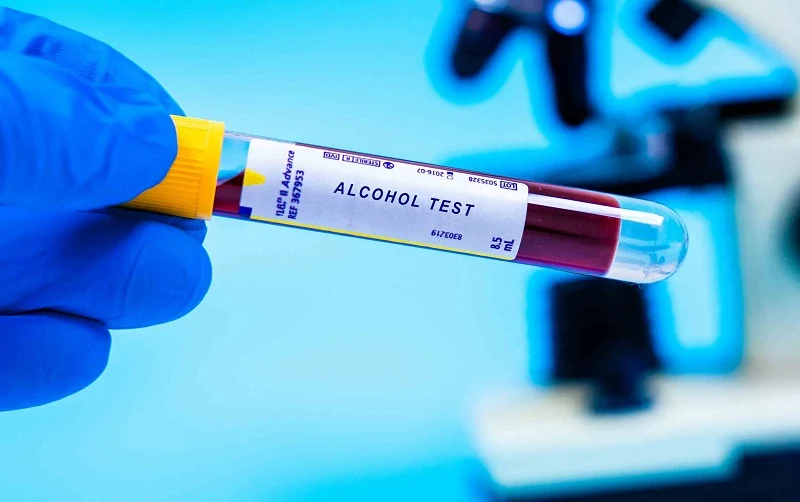
A DWI blood test checks two main things:
- Blood Alcohol Content (BAC) — The percentage of alcohol in your bloodstream.
- Presence of drugs or controlled substances, including prescription meds.
Texas defines intoxication as:
- 0.08% BAC or higher, or
- Loss of normal mental or physical faculties due to alcohol or drugs
So even if your BAC is below 0.08, you can still face a DWI charge if the officer claims you were impaired.
Why Blood Tests Matter So Much in DWI Cases
Blood tests are considered more accurate than breath tests by prosecutors and Texas courts. They are also used when police suspect drug impairment (breath tests can’t detect drugs).
Blood test results impact both:
- Administrative cases: Your driver's license suspension.
- Criminal cases: Whether you get convicted and what penalties you face.
A BAC of 0.15% or higher enhances the charge from a Class B misdemeanor to a Class A misdemeanor, increasing potential fines, jail time, and ignition interlock requirements.
#cta_start
Charged with DWI After a Blood Draw?
Don’t assume you’ll be convicted. There are defenses, and we know how to use them.
#cta_end
How Blood Samples Are Collected in Texas
After a DWI arrest, your blood may be drawn at a:
- Hospital
- Clinic
- Jail medical facility
Your blood must be drawn by a qualified medical professional, stored in blood vials, and transported to a lab (commonly using gas chromatography) for analysis.
You also have the right to request your own independent blood test at your expense, typically within two hours of the police-administered test.
Are Blood Tests Always Accurate? Not Even Close.
Blood tests are seen as the “gold standard,” but they are not infallible. Defense attorneys challenge blood tests all the time by exposing:
Collection Errors
- Improper sanitization
- Using alcohol swabs (can cause false positives)
- Wrong vial type
- Broken seals
- Expired kits
Handling & Storage Errors
- Incorrect labeling
- Lack of refrigeration
- Contamination
- Fermentation in the vial
Chain of Custody Problems
Every person who handles your blood must be documented. If the chain breaks, the evidence can be thrown out.
Lab & Human Errors
These include:
- Incorrect calibration
- Gas chromatography errors
- Misinterpretation
- Lack of certification
- Sample mix-ups
Medical Factors That Mimic Alcohol
Certain conditions can skew results, including:
- Diabetes
- Lactic acid buildup
- Ketosis
- Certain medications
These errors create reasonable doubt, which is exactly what an experienced DWI defense attorney uses to challenge your case.
Retrograde Extrapolation: Not an Exact Science
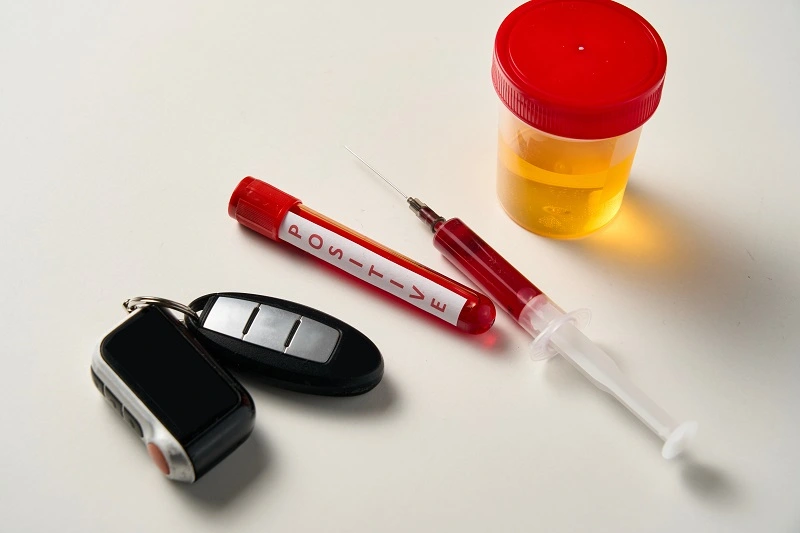
When labs test your blood, hours may have passed since your last drink. Prosecutors sometimes rely on retrograde extrapolation to argue what your BAC was while you were driving.
But retrograde extrapolation is only valid if the state knows:
- Exactly when you had your last drink
- How much alcohol you drank
- How fast you metabolize alcohol
- Your weight
- Your food intake
- The timeline of your traffic stop
If any of these are unknown (and they usually are), the science falls apart, and a skilled defense attorney can dismantle the testimony.
Does a Blood Test Guarantee a DWI Conviction?
Absolutely not.
A blood test is one piece of evidence, not the whole case. Prosecutors must still prove:
- You were intoxicated
- You were operating a motor vehicle
- You were in a public place
- You were intoxicated at the time of driving, not hours later
If evidence from the blood test is excluded, suppressed, or discredited, the prosecution may lose the backbone of its case.
Don’t Face DWI Blood Testing Alone
Texas DWI blood tests are complex, scientific, and intimidating, but the police and prosecutors use them because they seem unquestionable. But they aren’t. Collection errors, contamination, faulty lab procedures, and constitutional violations happen far more often than people realize.
If you’ve been arrested for DWI in Williamson County and had a blood sample taken, your future depends on how that evidence is handled. Ryan H. Deck has decades of experience dissecting blood tests, challenging lab results, and exposing weaknesses in the state’s case. As a former prosecutor, he understands how these tests are built and uses his expertise to tear them down. Contact us for a free case review.


Texas Board-Certified Criminal Defense Attorney with over 20 years of experience
Target
Target
