


Board-certified criminal lawyer in round rock, TX
What Happens If You Violate a Protective Order in Texas?
A protective order in Texas is meant to protect victims of family violence, sexual assault, or harassment from further harm. It’s a court order — not a suggestion — and violating it can lead to serious criminal penalties, including jail time and felony charges. Whether the situation involves a family member, a household member, or another protected individual, understanding the law can make all the difference in how you handle your case, as well as hiring a trusted protective order violation lawyer.
What a Protective Order Does

A protective order (sometimes called a restraining order or protection order) limits contact between two people. Typically, it prohibits the subject or defendant from:
- Contacting the person protected by the order in any threatening or harassing manner.
- Coming near their home, school, or workplace.
- Possessing firearms or other weapons.
- Harming or threatening to harm an assistance animal or companion animal owned by the protected person.
- Damaging personal property belonging to the victim.
- Tracking or following them physically or through a personal electronic device or tracking application.
Texas courts issue several types of protective orders, including:
- Temporary ex parte orders (granted quickly if the court finds a clear and present danger).
- Final protective orders issued after a full hearing.
- Magistrate’s emergency orders, often issued after an arrest for family violence or sexual assault.
Each type carries legal weight under the Texas Family Code and Texas Penal Code.
What Happens When Someone Violates a Protective Order
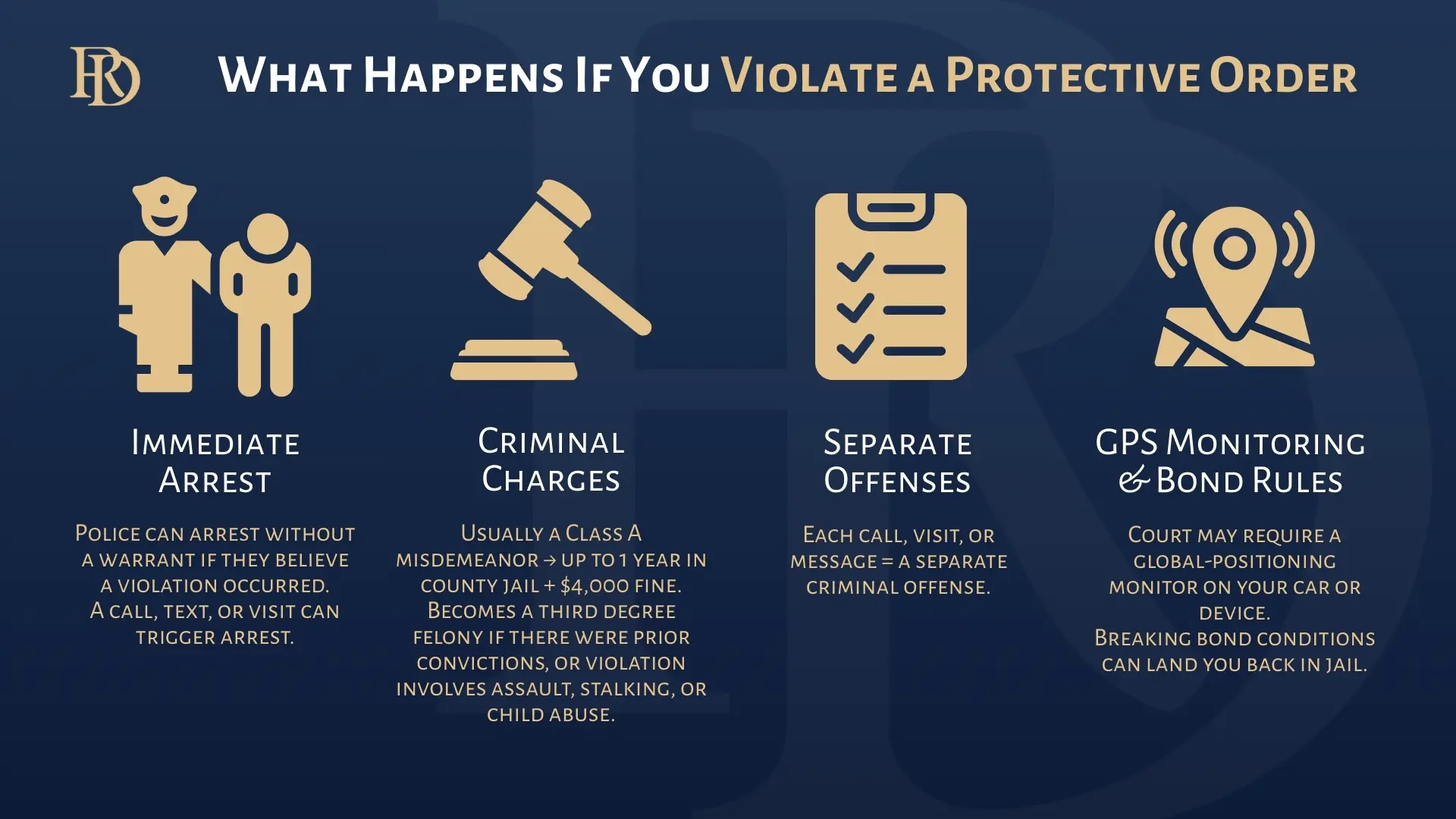
When a person violates a protective order, police don’t take it lightly. Even if the protected person invited contact, Texas law holds the defendant responsible for complying with the court order — not the other way around.
1. Immediate Arrest
A peace officer can arrest without a warrant if they have probable cause to believe a violation occurred. This means a phone call, text message, or even showing up at the victim’s house can trigger an arrest.
2. Criminal Charges
Under Texas Penal Code §25.07, violating a protective order is typically a Class A misdemeanor, punishable by up to one year in county jail and a fine of up to $4,000.
However, it becomes a third-degree felony if the person:
- Has prior convictions for the same offense, or
- Violates the order by committing assault, stalking, or child abuse, or
- Repeatedly communicates in a threatening or harassing way
A third-degree felony can mean 2 to 10 years in prison and up to $10,000 in fines.
3. Separate Offenses for Each Violation
Every act, including every text, every visit, and every phone call, can be charged as a separate offense. That’s why even a small or seemingly harmless contact can create a pile of criminal offenses in one case.
4. GPS Monitoring and Bond Conditions
If you’re released on bond, the court may impose additional bond conditions, such as installing a global positioning monitoring system on your motor vehicle or personal device. This ensures you stay away from restricted areas. Violating these conditions can send you back to jail.
Possible Defenses
Not every alleged violation is what it seems. Some people are accused of violating a protective order due to misunderstandings or false reports. Common defense strategies include:
- Lack of intent: You didn’t act in a threatening or harassing manner or didn’t knowingly violate the order.
- Conflicting court orders: Sometimes, orders of custody or communication overlap, leading to confusion.
- False allegations: The alleged victim might misreport or exaggerate events to gain leverage in a family or custody dispute.
- Improper service: The defendant wasn’t properly notified of the protective order before the alleged violation.
A strong defense starts with reviewing the exact terms of the court orders, any electronic communication evidence, and the arrest procedure itself.
What Happens After Arrest

After arrest, the process typically includes:
- Booking and arraignment: You’re formally charged and given a chance to post bond.
- Protective order hearing: The court reviews whether to extend or modify the order.
- Pretrial proceedings: Motions can be filed to suppress evidence or challenge the arrest.
- Trial or plea: Depending on the case, you may go to trial or seek a deferred adjudication community supervision arrangement to avoid a final conviction.
Each stage of the criminal procedure offers a chance to reduce penalties or resolve the case through negotiation.
Protective Orders in Family Violence Cases
A protective order in Texas often stems from allegations of family violence (or domestic violence), including sexual abuse, indecent assault, or human trafficking. In these cases, even minor violations are taken as proof of ongoing clear and present danger to the protected person.
Because these orders are closely tied to family law and criminal law, outcomes can also affect custody, child care facility access, and even your employment if you work with peace officers or children.
What to Do If You’re Accused of Violating a Protective Order
If you’re facing this situation, act fast and carefully:
- Do not contact the alleged victim — even to “clear things up.”
- Follow all bond and court conditions exactly as written.
- Gather evidence: texts, emails, or witness statements showing lack of intent or misunderstanding.
- Work with an attorney who understands both the criminal and family code implications of these cases.
Even one wrong move can turn a manageable case into a state jail felony or third degree felony conviction.
Get the Defense You Deserve with Ryan H. Deck
A violation of a protective order can quickly escalate from a misunderstanding to a serious criminal case. Even one text or unplanned encounter can lead to arrest, jail time, and lasting consequences under Texas law. Don’t try to handle it alone; hire a skilled criminal defense attorney.
Ryan H. Deck has defended countless clients across Williamson County facing protective order violations, family violence allegations, and related criminal charges. He understands how these cases unfold and how to protect your rights at every stage of the legal process.
If you’ve been accused of violating a protective order, act now before your options narrow. The sooner you get a defense attorney involved, the better your chances of avoiding harsh penalties and rebuilding stability in your life.


Texas Board-Certified Criminal Defense Attorney with over 20 years of experience
Target
Target

Charged with Violating a Protective Order?
Call Ryan H. Deck today for a free consultation and learn what steps you can take right now to protect yourself.