


Board-certified criminal lawyer in round rock, TX
Why Is the Fourth Amendment Important: Your Right to Silence
Most people have heard the phrase "you have the right to remain silent", but far fewer know which constitutional amendment actually backs that right up, and why it matters when police show up at your door or pull you over on a Williamson County road.
At The Law Offices of Ryan H. Deck in Round Rock, our clients often ask for a clear explanation of the Fourth Amendment and how it works alongside the right to silence. If police stopped, searched, questioned, or arrested you, our criminal defense attorney can review whether your rights were violated.
The short answer: the American Fourth Amendment is one of the most powerful legal shields you have against the government.
What Is the Fourth Amendment Right?
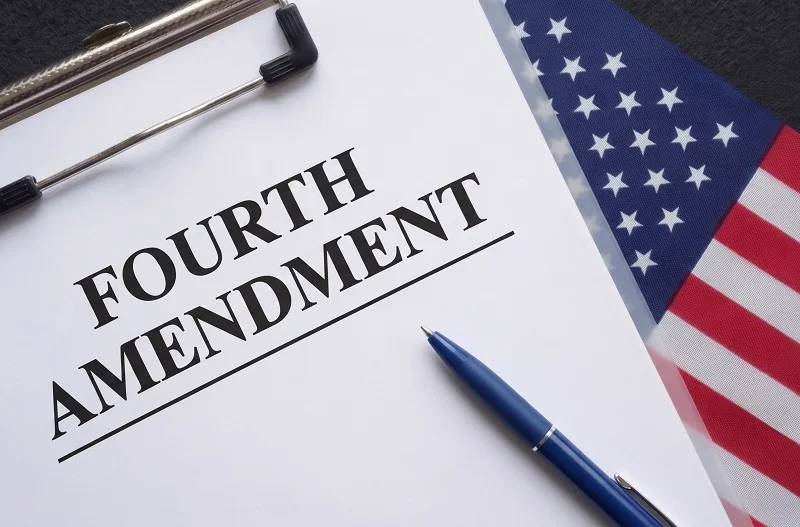
The clearest explanation of the Fourth Amendment starts with its text, which is part of the Bill of Rights, ratified in 1791. Here is the full text of the American Fourth Amendment as written in the U.S. Constitution:
"The right of the people to be secure in their persons, houses, papers, and effects, against unreasonable searches and seizures, shall not be violated, and no Warrants shall issue, but upon probable cause, supported by Oath or affirmation, and particularly describing the place to be searched, and the persons or things to be seized".
In plain terms, the Fourth Amendment prohibits the government (including police officers) from searching your person, home, vehicle, or belongings without a legally valid reason. It does not mean law enforcement can never search you. It means that in most situations, they must have probable cause and a valid warrant to do so lawfully.
The Fourth Amendment originated from colonial experiences with British "writs of assistance", which allowed arbitrary searches of homes. To prevent similar government overreach, the Founders established this amendment, which remains a highly litigated and scrutinized cornerstone of U.S. law today.
The Right to Silence and the Fourth Amendment: How They Connect
People often conflate the right to silence with a single amendment, but the protection actually draws from two: the Fourth Amendment (which limits searches and seizures) and the Fifth Amendment (which protects against self-incrimination). Together, they form the foundation of what most people call the "right to silence amendment".
Under the Miranda v. Arizona U.S. Supreme Court decision (1966), law enforcement must inform you of your rights before a custodial interrogation:
- You have the right to remain silent.
- Anything you say can be used against you in court.
- You have the right to an attorney.
- If you cannot afford an attorney, one will be appointed for you.
The Fourth Amendment comes into play because if police obtain evidence through an unlawful search, that evidence and any statements derived from it may be excluded. A search that violates your Fourth Amendment rights can collapse an entire prosecution, including confessions made afterward.

What Does "Reasonable Expectation of Privacy" Mean
Courts use the reasonable expectation of privacy to determine when the Fourth Amendment applies. This standard comes from the landmark U.S. Supreme Court case Katz v. United States (1967), which held that the Fourth Amendment protects people, not just places.
You have a reasonable expectation of privacy in:
- Your home and its curtilage (the area immediately surrounding it);
- Sealed mail and private communications;
- Your body and personal effects;
- Encrypted digital communications and data.
You generally do not have a reasonable expectation of privacy in:
- Things left in plain view in a public area;
- Conversations held in public spaces where others can hear;
- Trash placed at the curb for collection;
- Information voluntarily shared with third parties (under the "third-party doctrine").
This distinction matters enormously in Texas criminal cases. If law enforcement gathered evidence from a location where you had no reasonable expectation of privacy, the Fourth Amendment may not protect you. If they crossed a line where you did have that expectation, the evidence could be suppressed.
Legal Searches vs. Illegal Searches and Seizures
There is often confusion about what makes a search legal or illegal under the Fourth Amendment. Here is a straightforward breakdown.
Legal Searches Under the Fourth Amendment
A search is lawful when one of the following conditions exists:
- A valid warrant describes the specific place to be searched and items to be seized.
- Consent was freely and voluntarily given by the individual.
- Probable cause supports an exception to the warrant requirement.
- The evidence was in plain view of an officer who was lawfully present.
- A lawful arrest created the basis for a search incident to that arrest.
- Exigent circumstances existed, such as an imminent threat to safety or risk of evidence destruction.
Illegal Searches and Seizures
A search becomes illegal when law enforcement:
- Searches beyond the specific scope of a warrant.
- Has no probable cause and no warrant.
- Relies on a tip that does not meet the legal threshold for probable cause.
- Conducts a stop or search based on race, appearance, or a vague "feeling".
- Uses deception to manufacture consent.
In Texas, courts apply both federal Fourth Amendment standards and Texas Code of Criminal Procedure Article 38.23, which provides an independent state-level exclusionary rule. That means even evidence that might survive a federal challenge could still be suppressed under Texas law.
Exceptions to the Fourth Amendment Warrant Requirement
The Fourth Amendment does not require a warrant in every situation. Several well-established exceptions allow warrantless searches when specific conditions are met.
The Automobile Exception
Because vehicles are mobile and can quickly move beyond a court's jurisdiction, the U.S. Supreme Court has long recognized that police may search a vehicle without a warrant if they have probable cause to believe it contains evidence of a crime. This exception comes up constantly in DWI and drug cases across Williamson County.
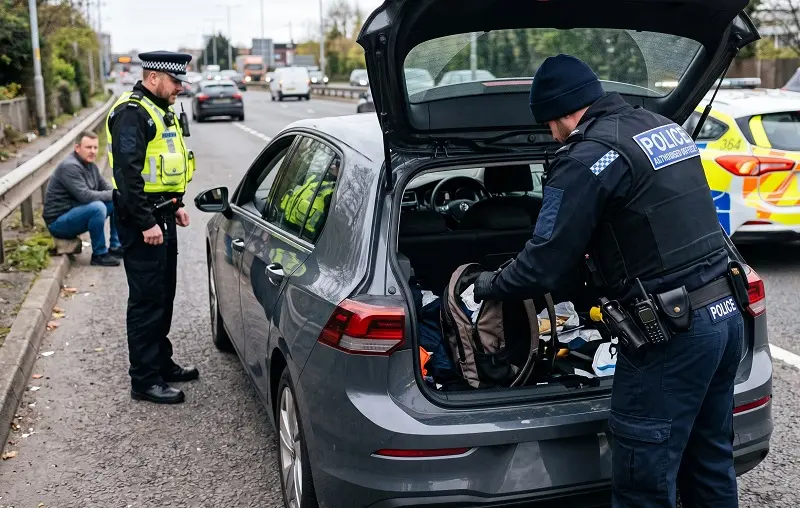
Search Incident to a Lawful Arrest
When a lawful arrest occurs, officers may search the arrestee and the immediate area within their reach. This exception is narrower than many people assume. It does not give police unlimited authority to tear apart a vehicle simply because someone was arrested.
Consent Searches
If you voluntarily say "yes" to a search, officers do not need a warrant. This is why defense attorneys consistently advise: politely but clearly refuse consent. You can say, "Officer, I do not consent to a search". Refusal alone is not probable cause.
Exigent Circumstances
When there is an immediate danger to the public or a genuine risk that evidence will be destroyed before a warrant can be obtained, officers may act without one. Courts scrutinize these claims carefully, and the exception cannot be manufactured by the police.
Inventory Searches
When a vehicle is lawfully impounded, officers may conduct an inventory search to document its contents. However, an "inventory search" used as a pretext to search for evidence (rather than merely to catalog property) may be challenged as unlawful.
The Exclusionary Rule: When Evidence Gets Thrown Out
This is where the Fourth Amendment right becomes a real-world defense tool. The exclusionary rule holds that evidence obtained in violation of the Fourth Amendment generally cannot be used against a defendant in court. This doctrine was established in Mapp v. Ohio (1961) and applied to state prosecutions through the Fourteenth Amendment.
When evidence is suppressed, the practical effect is often dismissal of the case. If the state's entire case rests on a bag of drugs found during an illegal car search or a confession obtained after an unlawful detention, suppressing that evidence can end the prosecution.
There are limited exceptions to the exclusionary rule, including:
- The good-faith exception (officers reasonably relied on a warrant later found defective);
- The independent source doctrine (evidence was discovered through a separate, lawful investigation);
- The inevitable discovery doctrine (evidence would have been found through lawful means anyway).
An experienced criminal defense attorney will examine each of these exceptions and push back hard when the state tries to use them inappropriately.
How Fourth Amendment Violations Play Out in Texas Criminal Cases
Texas courts take violations of the Fourth Amendment and Article 38.23 seriously. In practice, here is what happens when a violation is alleged:
- Defense attorney files a Motion to Suppress the challenged evidence.
- A suppression hearing is held before the trial judge, where both sides present evidence and argument.
- The judge rules on whether the search was lawful and whether the evidence may be used.
- If suppressed, that evidence cannot be presented to the jury.
The suppression hearing is often the most consequential stage of a criminal case. It is where the constitutionality of police conduct gets put directly under a microscope. If the court finds that a Fourth Amendment violation occurred, the prosecution loses access to whatever was seized, and the case frequently cannot proceed without it.
What to Do When You Believe Your Rights Were Violated
If you think law enforcement crossed a constitutional line, follow these steps:
- Do not physically resist any search, even one you believe is unlawful. Resistance creates new charges and does not preserve your legal remedies.
- Stay silent. Invoke your right to silence clearly: "I am invoking my right to remain silent and my right to an attorney".
- Note every detail you can remember: what officers said, where they searched, how long the stop lasted, and whether they stated a reason.
- Contact a criminal defense attorney immediately. The sooner a lawyer reviews the facts, the better the chances of filing an effective motion to suppress.
Courts will not fix a Fourth Amendment violation on their own. The burden falls on the defendant to raise it through the proper legal process, making early, qualified legal help a practical necessity, not just a suggestion.
Protect Your Fourth Amendment Rights in Williamson County
The Fourth Amendment is not a technicality. It is one of the cornerstones of American liberty, ratified to stop the government from treating citizens as suspects without evidence. When law enforcement violates it, the consequences should fall on the state's case, not on you.
At The Law Offices of Ryan H. Deck, we have spent over 20 years fighting for the constitutional rights of the accused in Williamson County, TX. If you were stopped, searched, arrested, or charged and believe your Fourth Amendment rights were not respected, contact us today for a free consultation. Your rights, your freedom, and your future deserve a real defense.
FAQs


Texas Board-Certified Criminal Defense Attorney with over 20 years of experience
Target
Target

Think Your Fourth Amendment Rights Were Violated?
Do not wait. Evidence can disappear, and legal deadlines move fast. Contact The Law Offices of Ryan H. Deck today for a free consultation.
Does the Fourth Amendment apply to federal agents, not just local police?
Yes. It applies to all government actors, including federal law enforcement agencies such as the FBI and DEA, not only to local or state police officers.
Can the Fourth Amendment protect you during a search at work?
It can, but with limits. Government employees have some Fourth Amendment protections in their workplace. Private employees generally do not, since the amendment only restricts government conduct, not private employers.
Does the Fourth Amendment cover digital devices like phones and computers?
Yes. The U.S. Supreme Court ruled in Riley v. California (2014) that police generally need a warrant to search the digital contents of a cell phone, even after a lawful arrest.
Can a Fourth Amendment violation affect charges beyond the original search?
Yes. The "fruit of the poisonous tree" doctrine means that any evidence discovered as a result of an initial unlawful search may also be suppressed, not just what was found directly.
Does giving a false name to the police violate the Fourth Amendment?
No, for specifically federal Constitutional law. State laws may outlaw giving false identification to the police when asked. The Fourth Amendment governs searches and seizures, not statements. Giving false identification raises separate legal issues under Texas law and does not fall under Fourth Amendment protections.