


Board-certified criminal lawyer in round rock, TX
Do I Have to Roll Down My Window for a Texas Police Officer?
Texas law doesn't specify exactly how far you must lower your car window during a traffic stop.
But that doesn’t mean you can keep it shut, or crack it an inch and call it done. Once an officer gives a direct, lawful order, you have to comply. Refusing it can turn a routine stop into an arrest.
In this article, our Williamson County criminal defense lawyer explains what the law actually requires, where your rights begin, and what to do if a stop already went wrong.
What Texas Law Actually Says About Rolling Down Your Window
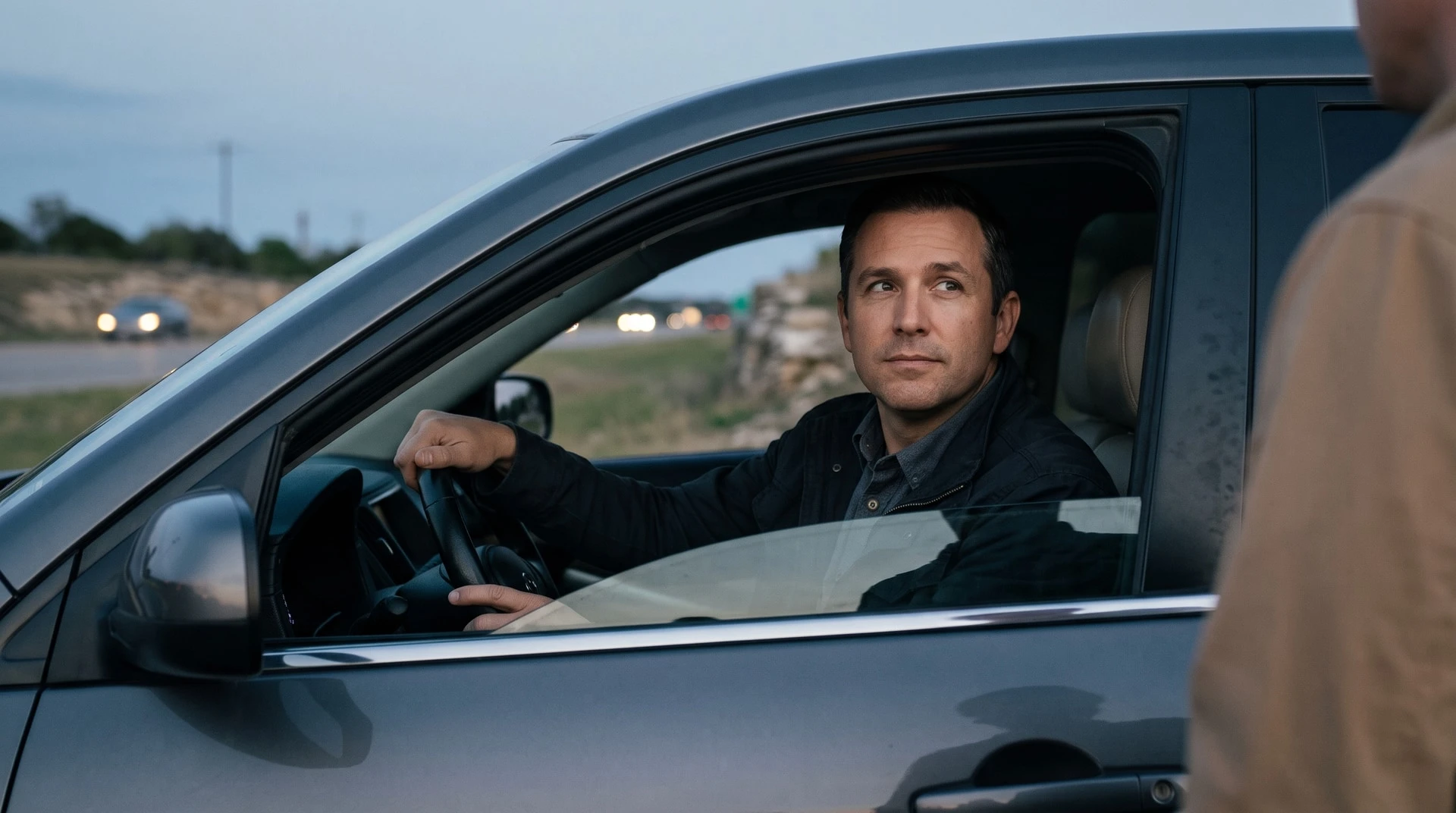
No single Texas statute says "you must lower your window to X inches." The legal requirement comes from a different place: Texas Transportation Code §542.501, which makes it a misdemeanor to willfully fail or refuse to comply with a police officer’s lawful order or direction. Traffic stops are where it comes up most often.
So the question isn't really about windows. It's about whether the officer's instruction counts as a lawful order. Courts have treated an instruction to lower a window the same way they treat an instruction to step out of the car: a minor inconvenience that officer-safety concerns can justify. In United States v. Williams, decided by the D.C. Circuit on August 26, 2025, the court applied the U.S. Supreme Court's reasoning from Pennsylvania v. Mimms (1977) to hold that ordering a driver to lower tinted windows that blocked visibility into the car was a minimal intrusion, easily outweighed by the government's interest in officer safety.
Two things worth knowing about that case before treating it as a blanket rule:
- It's a federal D.C. Circuit decision, not a Texas court or the Fifth Circuit, which covers Texas. It's persuasive, not binding, in a Texas courtroom.
- One judge on the panel wrote separately to warn against reading the rule too broadly. It fit facts involving a late-night encounter with an illegally parked car in a high-crime area, with tint far darker than the legal limit, not every window that merely makes visibility harder.
Williams is not the last word on this, either. The driver has petitioned the U.S. Supreme Court to review it (No. 25-7560, filed June 2026), arguing the rule conflicts with other federal circuits. As of this writing, that petition is still pending, which is one more reason to treat this as a developing area, not a settled one.
In practice, that nuance rarely matters at the roadside. The officer, not the driver, controls the stop in the moment. The place to argue whether an order was truly lawful is in court, with a defense attorney, not through a half-open window.
Request vs. Lawful Order: Where the Line Actually Sits
Part of the confusion online comes from blurring two very different things: a casual request and a repeated, direct order during an active detention. Texas Transportation Code §542.501 only attaches a penalty to the second one.
This is why two drivers can have the same instinct (“I'll just crack it an inch, that's enough to talk”) and end up with opposite outcomes. If the officer accepts a partial opening and gets what they need, nothing happens. If the officer repeats the instruction as a direct order because they can't see inside, confirm your identity, or pass a tint meter across the glass, refusing that order is where the legal exposure starts.
What You're Actually Required to Do During a Texas Traffic Stop
Setting the window question aside, Texas law imposes a specific set of obligations once you're lawfully stopped:
- Stop promptly and safely. Pull to the right as soon as it's safe to do so.
- Display your driver's license on request. This duty comes from Tex. Transp. Code §521.025.
- Identify yourself if you're lawfully detained. Under Penal Code §38.02(b-1), added by Senate Bill 1551 effective September 1, 2023, it's an offense if a detained driver both fails to provide or display a license and intentionally refuses to give their name, license number, residence address, or date of birth when asked. Both conditions must be true. If you display your license, even through a partly lowered window, this offense doesn’t apply. If you can’t produce it, giving your name, license number, address, and date of birth keeps you clear.
- Comply with a lawful exit order. Under Pennsylvania v. Mimms (drivers) and Maryland v. Wilson (passengers), an officer may order anyone out of a lawfully stopped vehicle as a routine safety measure, without needing a separate reason.
- Answer identifying questions, not every question. You can decline to answer questions about where you're going, where you've been, or anything beyond the identifying information above.
- Decline a search without physically resisting it. If an officer has probable cause or another valid legal basis, they can search without your consent. Your remedy is to state that you don't consent and raise it later with an attorney, not to physically block the search.
Our guide on Can You Refuse a Vehicle Search in Texas? walks through exactly when officers can search without your consent.
What Happens If You Refuse to Roll Down Your Window
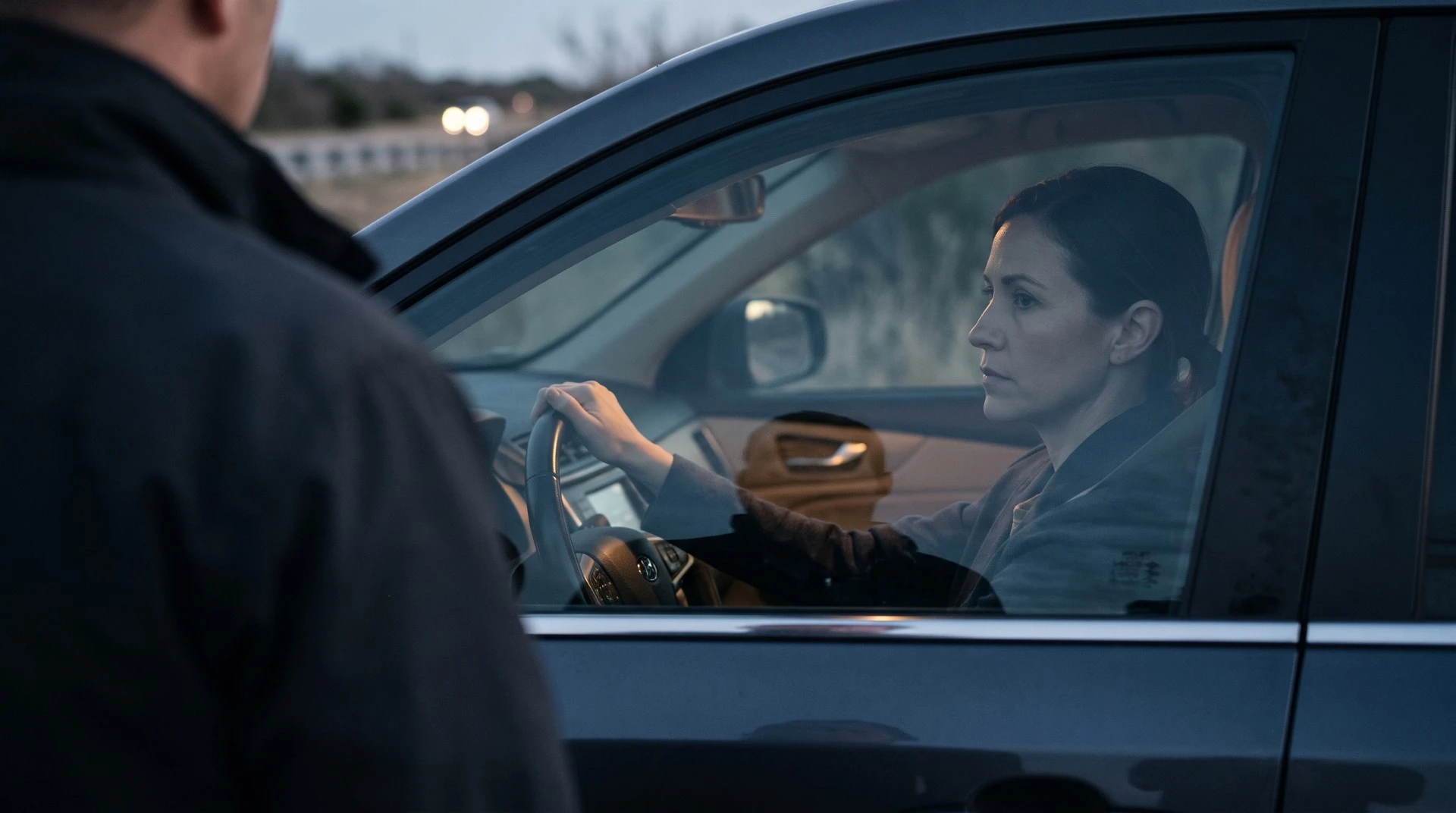
Refusing a repeated, lawful order to lower your window carries two separate layers of risk.
The traffic-code layer: A willful refusal to comply with a lawful order under Tex. Transp. Code §542.501 is a misdemeanor on its own, punishable by a fine of up to $200.
The interference layer: if the standoff continues (locked doors, continued refusal, debating the legality of the stop through the glass), officers can escalate to Penal Code §38.15, Interference with Public Duties, a Class B misdemeanor carrying up to 180 days in county jail and a fine of up to $2,000. Section 38.15(d) provides a defense if your interference ‘consisted of speech only,’ but Texas courts generally treat physical noncompliance with an officer’s directives, such as refusing to step out after a direct order, as conduct rather than speech. That can put the defense out of reach.
Once that line is crossed, the officer typically doesn't keep negotiating through the window. They move straight to ordering the driver out of the car under Mimms, and if the driver still won't comply, that can mean forced removal from the vehicle and an arrest, on top of whatever the original stop was for.
Window Tint and Officer Visibility
Tint is one of the most common reasons an officer repeats an instruction to lower a window. Under Tex. Transp. Code §547.613, front side windows must let in at least 25% of light (with no more than 25% reflectance), and windshield tint is limited to a strip along the top of the glass. To run a tint meter across the glass, the window must be lowered at least partway, so a routine equipment check can turn into a request to lower the window fully.
If the tint turns out to be illegal, and the officer also can't see into the cabin, that combination is exactly what supported the order in Williams. If the tint is legal, the analysis is less settled, and that's precisely the distinction the concurring judge flagged as a limit on how far the rule should extend.
Practical Steps for a Safer Traffic Stop in Texas
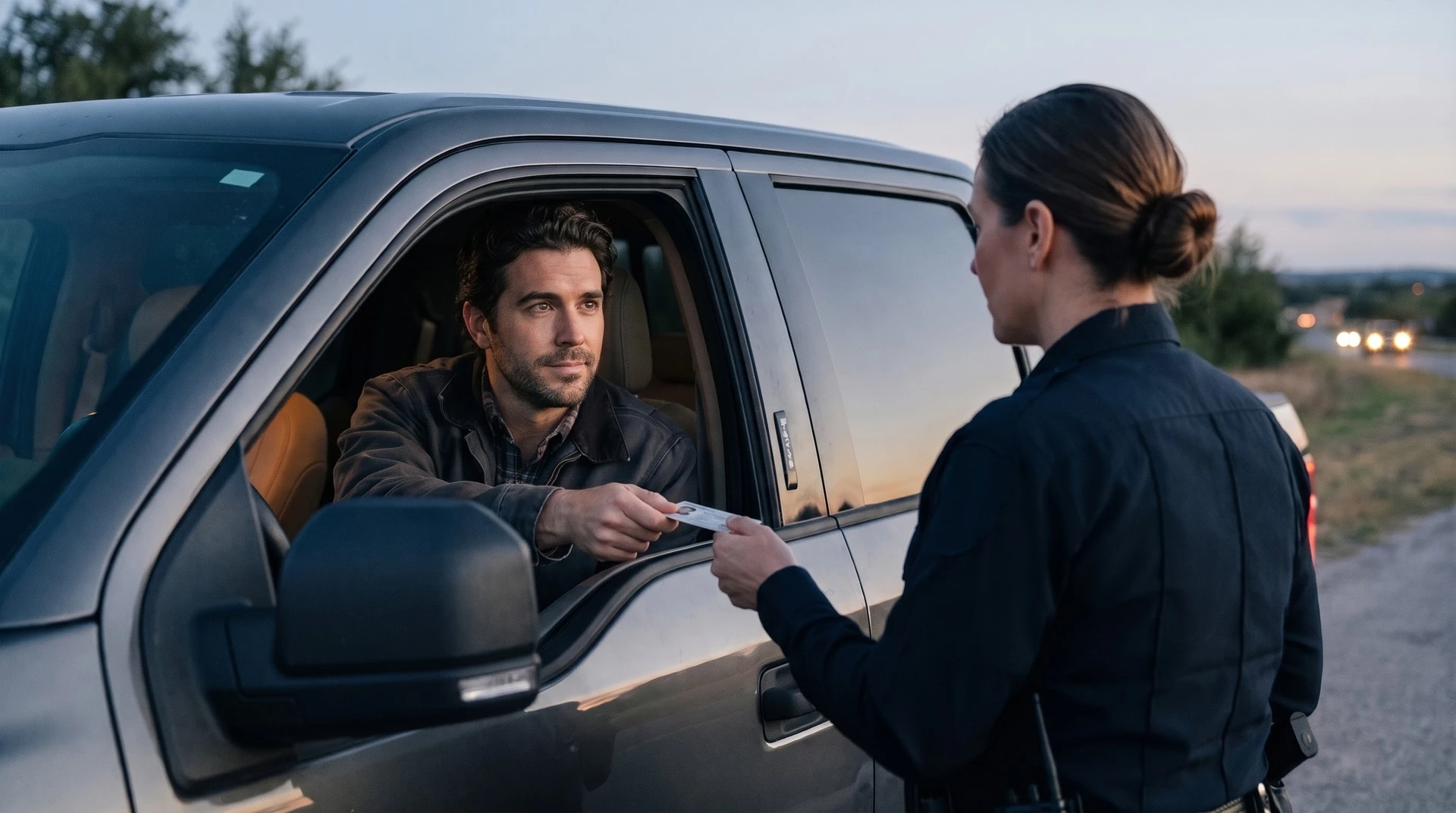
Separate from what the law requires, there's a safer way to get through the stop itself:
- Pull over as soon as it's safe, as far to the right as the road allows.
- Put the vehicle in park, set the brake, and turn off the engine.
- Turn on your hazard lights and the interior dome light if it's dark out.
- Lower the driver's window if you feel safe, and keep both hands visible on the steering wheel.
- Tell the officer where your documents are before reaching for them. Don't dig through the glovebox or center console without saying so first.
- Stay in the vehicle unless you're told to exit.
- If you doubt the stop is a real officer (an unmarked car, a late-night stop in an unfamiliar area), turn on your hazards, drive slowly, call 911 and stay on the line, and continue to a well-lit, populated location before stopping.
This sequence largely tracks the Texas Department of Public Safety’s guidance for drivers approached by law enforcement.
Do You Have to Answer Police Questions During a Texas Traffic Stop
No, not beyond the identifying information described above. Texas law does not punish a driver for declining to answer additional questions during a lawful detention, but it does punish refusing to display a license or, once detained, refusing to give a name, license number, address, or date of birth. You can be polite and still decline to answer questions about where you're coming from or where you're headed.
Charged After a Texas Traffic Stop? Talk to a Board-Certified Defense Lawyer.
If a stop in Williamson County turned into an arrest, charges, or a search you didn't consent to, you need someone who knows how these stops actually play out in court. The Law Offices of Ryan H. Deck is led by a Board Certified criminal defense attorney and former prosecutor serving Round Rock, Georgetown, Cedar Park, Hutto, and the rest of Williamson County. Call (512) 351-0644 or request a free consultation.
FAQ


Texas Board-Certified Criminal Defense Attorney with over 20 years of experience
Target

Already Dealing with Charges from a Texas Traffic Stop?
If a stop led to a citation, an arrest, or an interference charge, the specific words and actions at your window usually become the center of the case. Ryan H. Deck reviews the stop step by step to find exactly where the officer's order stopped being lawful, and where your defense begins.
Does Texas law require me to roll my window all the way down?
No specific statute sets an exact distance. The legal requirement comes from the general duty to obey a lawful order under Tex. Transp. Code §542.501, which an officer can invoke to communicate, verify your identity, or check your window tint.
How far do I have to roll my window down for police in Texas?
At minimum, roll it down far enough to communicate with the officer and pass documents. If the officer repeats the instruction as a lawful order (because of tint, visibility, or safety concerns), you're required to comply with that specific order, not just a partial crack.
Can a police officer break my window if I refuse to roll it down?
Continuing to refuse a lawful order can lead to a forced exit from the vehicle and an arrest. Whether any specific use of force was reasonable is a separate legal question that depends on the facts of that stop.
Can officers make me roll down tinted rear windows, not just the front?
The D.C. Circuit’s Williams decision upheld an order to lower the car’s windows, not just the driver’s, when tint blocked the officers’ view. That ruling is persuasive, not binding, in Texas.
What happens if I only crack my window an inch and refuse to open it further?
If the officer accepts that and gets what they need, nothing happens. If the officer gives a direct order and you still refuse, you risk a misdemeanor under §542.501, escalation to Interference with Public Duties under §38.15, and an exit order under Mimms.